 Thayillam Shopping Complex, Ulloor, Trivandrum
 info@thayillampaints.com
 +91 8089089081
 Mon-Sat: 9am-7pm

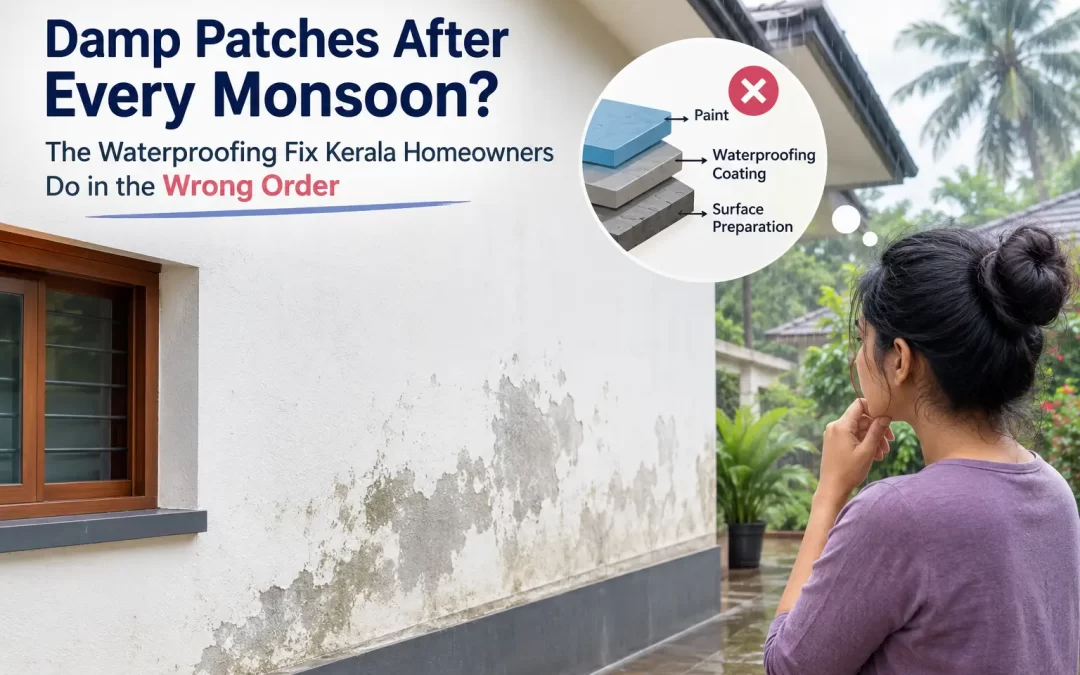
You know how it goes. Edavappathi rolls in, the rain doesn’t stop for days, and somewhere around July a brown stain appears in the corner of the bedroom . Nobody panics at first. By September the paint is bubbling, the plaster comes off like chalk when you touch it, and the whole room smells a little like a damp towel. So you call a painter, he scrapes it, repaints it, and the wall looks fresh again. For about two months.
Then the stain comes back. Usually bigger.
Here’s the thing most people don’t hear until the second or third repaint: the paint isn’t the problem. The order of the work is. Proper waterproofing for walls is a sequence, and if you do the steps backwards, you’re just painting over a leak.
Why Kerala walls stay damp
Think about what our houses go through. Months of heavy rain, then thick humidity, then hard sun, then rain again. Walls take all of it. Water slips in through hairline cracks in the outer plaster, climbs up from the ground through the base of the wall, leaks at the terrace edge or the sunshade joint, or runs out of a damaged pipe hidden inside the wall. Once it’s in, it pushes outward from behind the paint. That’s why the paint bubbles and peels even when the painter did a perfectly good job.
This is why a real wall dampness solution starts with a question: where is the water actually coming from? The patch inside your room is often just the place where the water finally gave up and showed itself. The entry point could be a crack on the outside wall, a bad terrace joint, or a gap around a window frame, sometimes a full metre away from the stain.
The wrong order (and why it keeps happening)
Most people paint first and worry about the leak later. It’s an understandable instinct, because the stain is ugly and you want it gone. But fresh emulsion on a damp wall is a short story. It looks great for a few weeks, then the trapped moisture pushes it right off.
The next mistake is putting a waterproofing coat on a wall that’s still wet. These coats need a clean, fairly dry surface to hold on to. Apply one to a damp surface, and it may peel away because of the moisture underneath.
And then there’s the one I see most often, is fixing only the inside of the wall. Scraping and repainting an interior wall while the outer wall keeps soaking up rain is like mopping the floor with the tap still running. You can mop all day.
The order that actually works
Start outside. After a good rain, walk around your house and look hard at the walls. Hairline cracks, broken plaster, open joints around windows, the joint where the terrace meets the wall. Seal these first with crack filler and a suitable sealant. If the water can still get in, nothing else you do will hold.
Then wait. I know, nobody likes this part. But A damp wall needs sufficient time to dry before waterproofing and painting can begin. The required drying time depends on the extent of the moisture and the condition of the wall. , and rushing it is the number one reason waterproofing jobs fail. This is why the months right after the monsoon, October to December, are the best time to do the work. The weather is on your side for once.
Once the wall is dry, take off everything that’s already failing. Flaking paint, loose putty, crumbling plaster. Use a wire brush, scrape it properly, and wipe off the dust. A new coat needs something solid under it, and painting over weak material just hides the weakness for a while.
Now comes the waterproofing layer itself. Depending on your wall, that could be a waterproofing coating on the exterior, a damp-proof treatment on the inner wall, or a waterproofing compound at the terrace and joints. This is the layer doing the real protecting, and the success of the remaining steps depends on it. Get this right and waterproofing for walls stops being a yearly chore.
Next, primer. A good primer seals the surface, evens out how much the wall soaks up, and gives the topcoat something to grip. People skip it to save a little money, or pick the wrong one, and then wonder why a correct-looking job fails within a year.
Putty goes on after that, wherever the surface needs levelling. Paint comes last. Only now does it do its actual job, which is to give you colour and a protective finish on a wall that’s sound and dry.
Pick materials that work together
Here’s something people don’t think about. Waterproofing isn’t one product. It’s a small system of crack filler, waterproofing coat, primer, putty and paint, and these need to suit each other. If you buy products from different sources without checking their compatibility the layers may not bond well, and that’s where a lot of jobs quietly go wrong.
At Thayillam Paints, primers, putty, thinners, brushes and wall texture products are all under one roof. That means you can plan the whole job in a single visit and ask your questions to the same people.
If you’re searching for a paint shop in Vazhuthacaud or a paint shop in Maruthoor, come in with a photo of the damp patch. A short video of the wall after rain is even better. Tell us how old the house is and which direction the wall faces, because a west-facing wall takes a lot more rain than a sheltered one. With that information, we can help you figure out what you need and in what order to use it. A few minutes of guidance at the start can save you from repainting the same wall every monsoon.
A word on cost
Waterproofing can feel like an extra bill when all you wanted was a fresh coat of paint. I get it. But think about the other way. You pay for paint and labour now, only to pay for them again next year when the patch returns. Fixing the cause first and painting second means one proper job, and a wall that stays clean through the next few monsoons. That’s what a lasting wall dampness solution really buys you.
Short FAQ
Can I just paint over a damp patch?
You can, but it won’t last. The moisture behind the wall will push the paint off, often within a few weeks. Find where the water is coming from, fix that, let the wall dry, and then paint.
When is the best time to do waterproofing for walls in Kerala?
The dry months after the monsoon, roughly October to February, are the best time for waterproofing for walls. The walls have had a chance to dry out and the coatings cure properly.
Is a damp patch inside my room always caused by something inside?
No. More often the water is entering through the outer wall, the terrace or a window joint. A leaking pipe can also be the cause, so check for that before you decide on a wall dampness solution.
Do I need a primer after waterproofing?
Yes. Primer helps the putty and paint bond to the wall and gives a more even finish, and that helps the whole job last longer.
Where can I find a paint shop in Vazhuthacaud or Maruthoor for waterproofing products?
If you’re looking for a paint shop in Vazhuthacaud or a paint shop in Maruthoor, Thayillam Paints has primers, putty, thinners, brushes and wall texture products, and our team can help you plan the right order of work for your wall.
Recent Comments